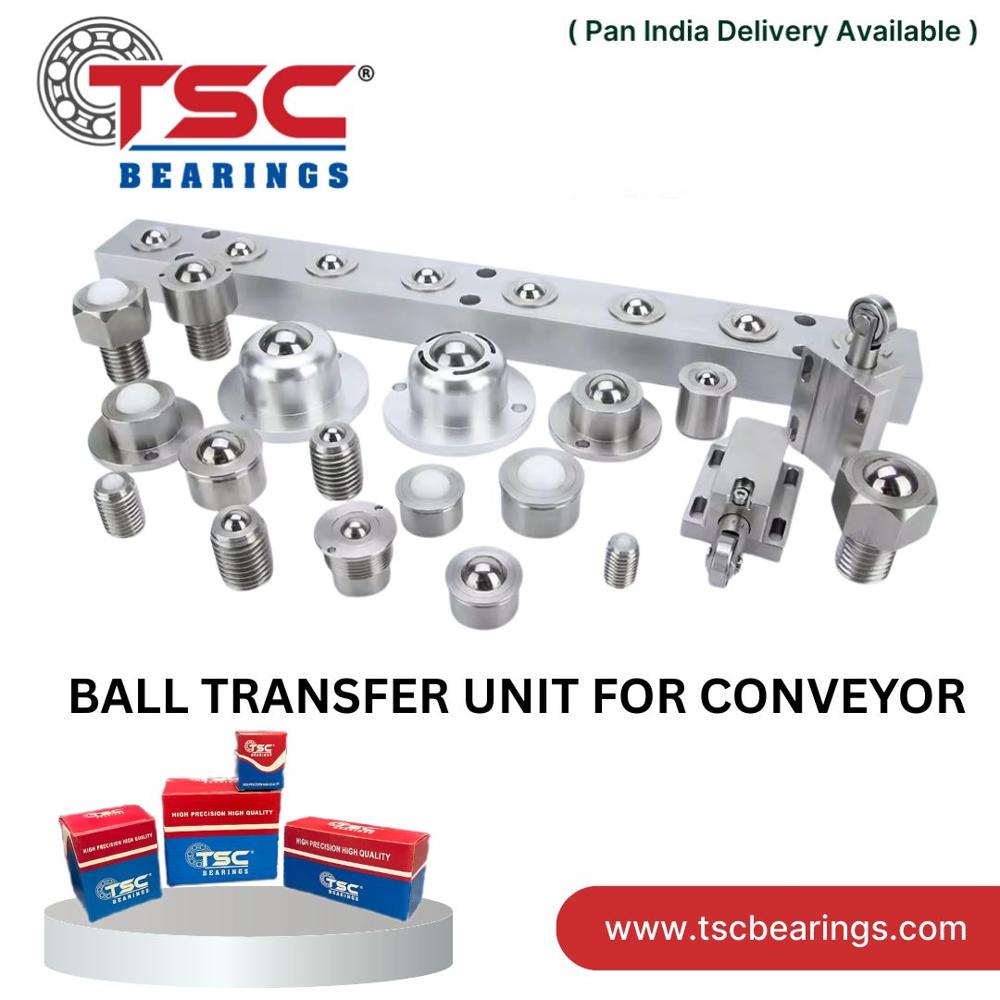
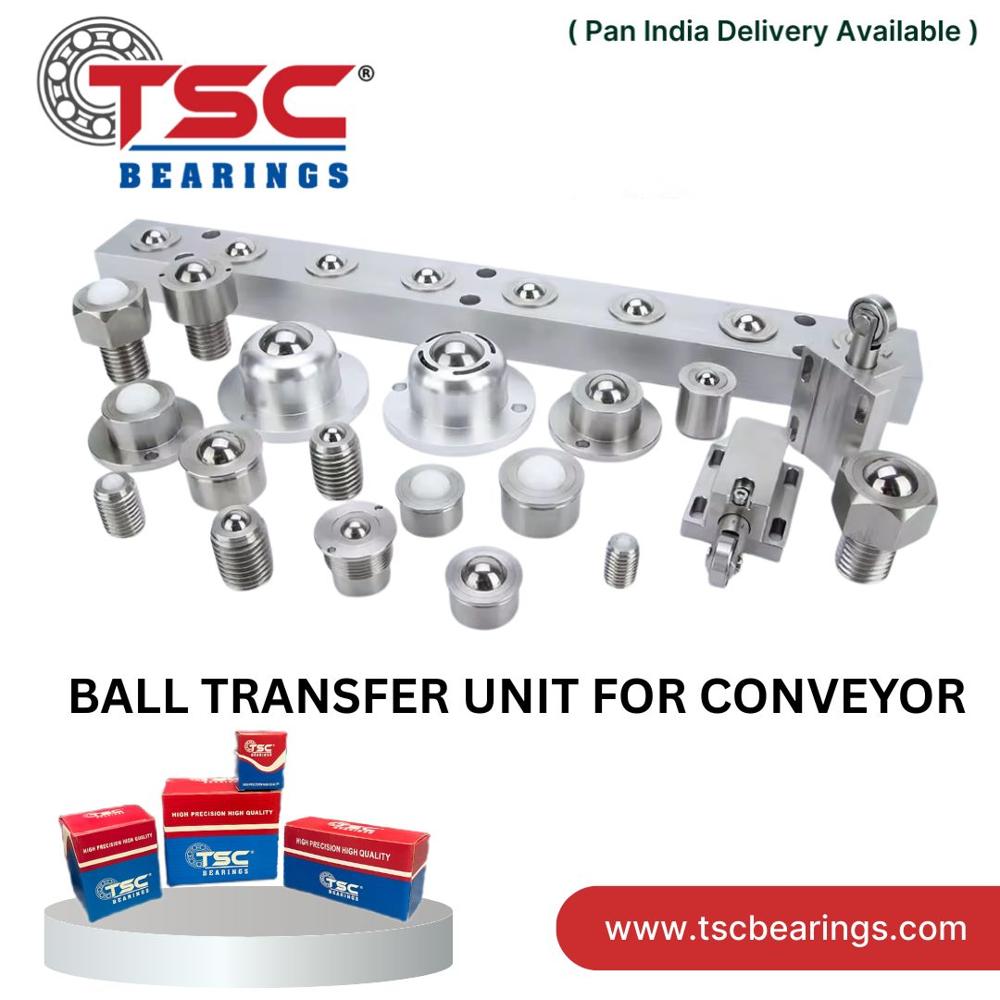
About TSC KSM 12 BALL TRANSFER UNIT
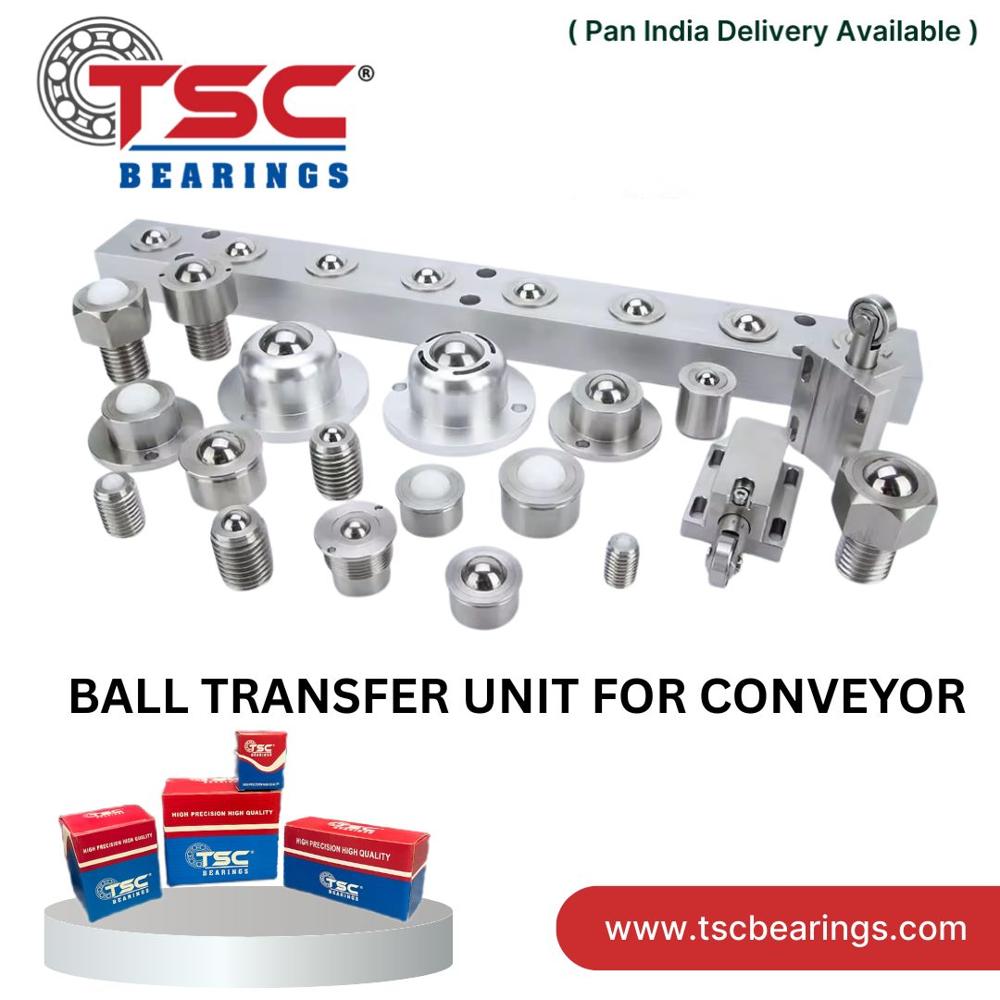
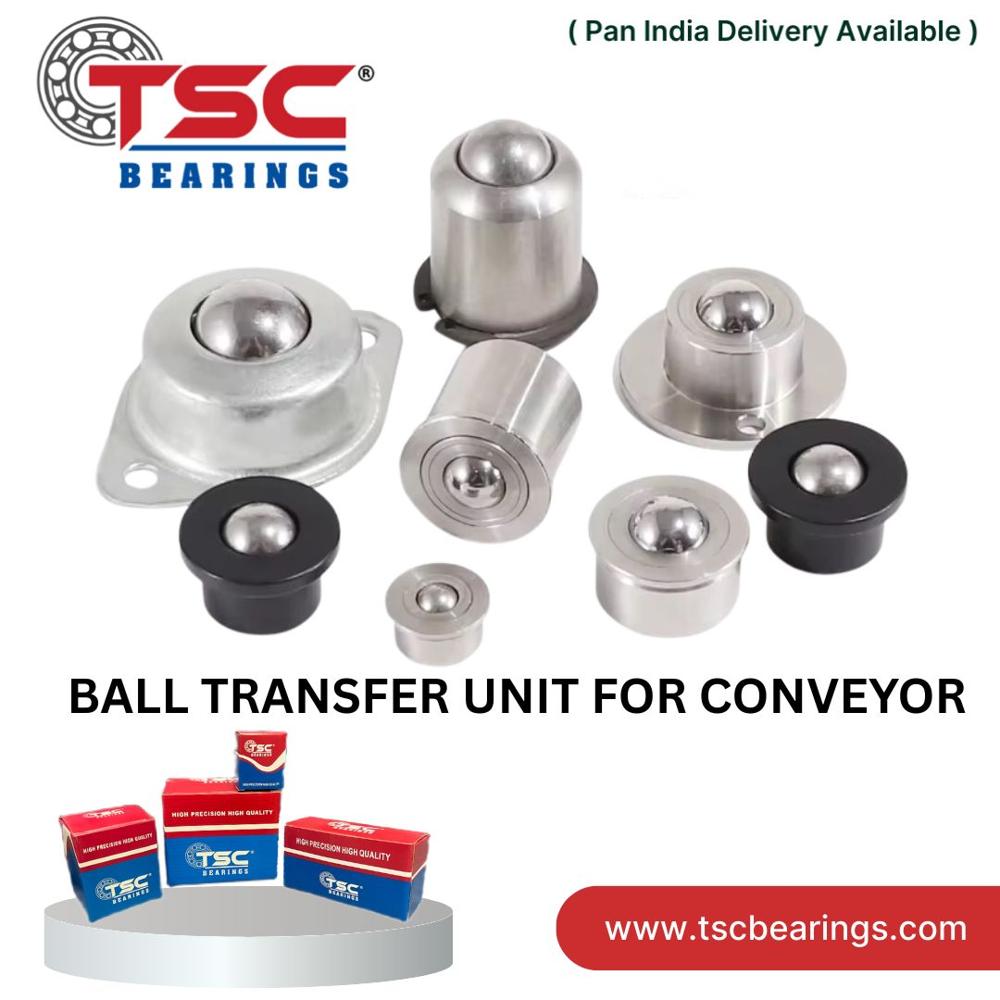
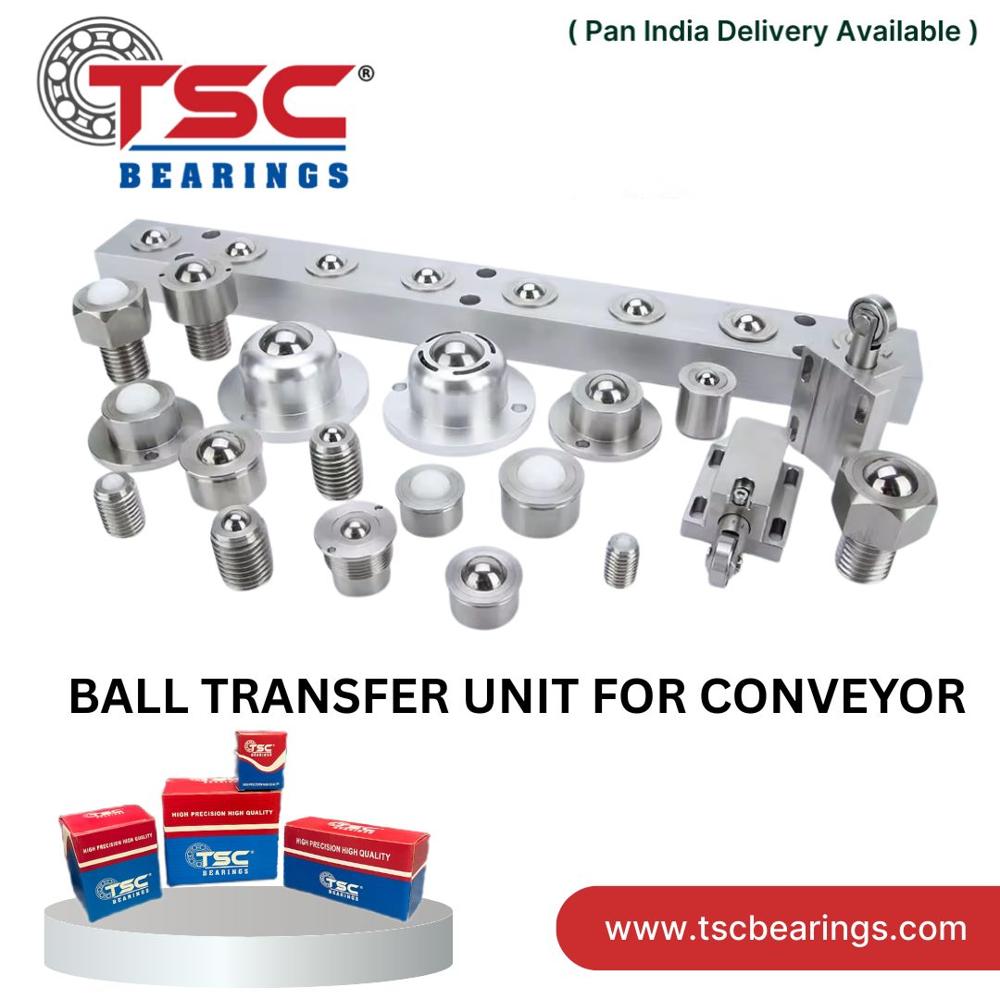
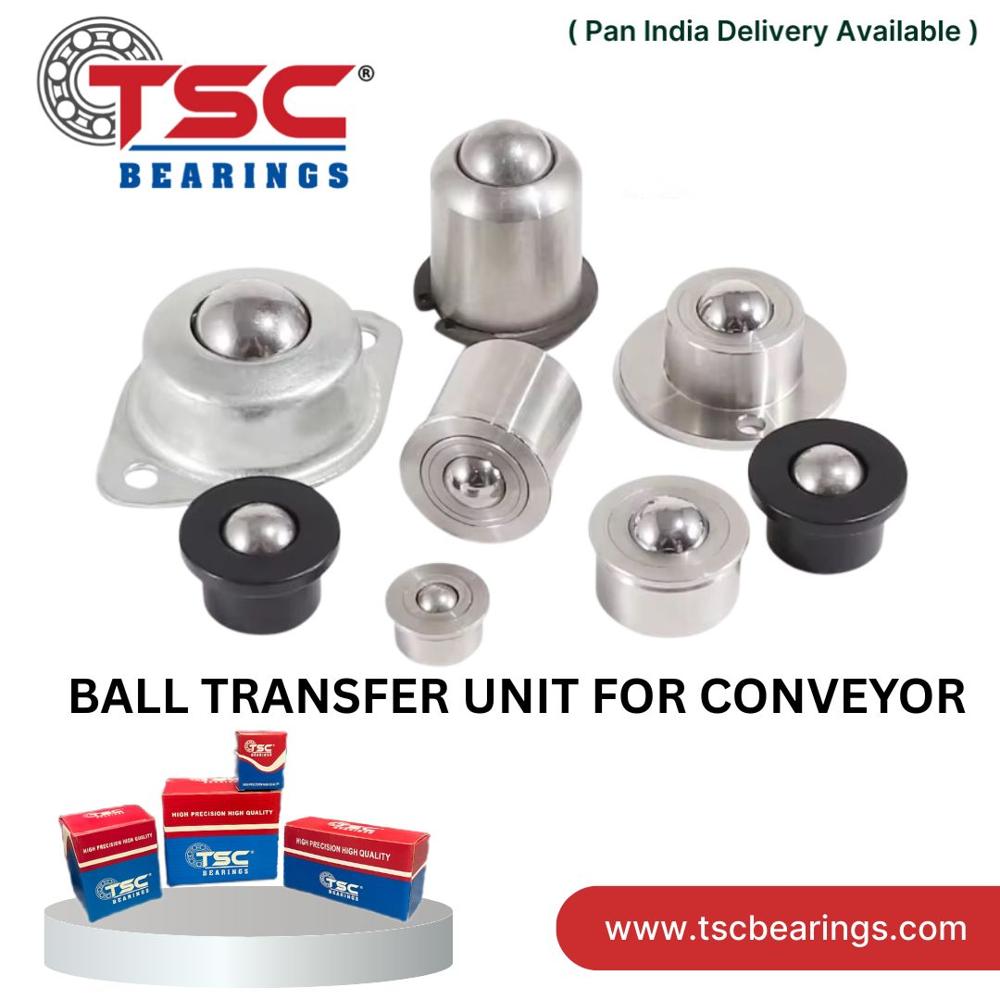
A Ball Transfer Unit (BTU) is a mechanical device allowing omnidirectional movement of loads via a spherical ball.
Key Features
- Spherical Ball: Main rolling element for multidirectional movement.
- Housing: Contains and supports the ball.
- Load Capacity: Varies by design, size.
- Omnidirectional: Facilitates movement in any horizontal direction.
- Low Friction: Enables easy load shifting.
Components
- Top Ball: Exposed spherical ball for contact with load.
- Support Balls: Smaller balls supporting the top ball.
- Housing/Body: Structural containment.
- Mounting: Often flange or base mounted. Applications
- Conveyor Systems: For diverting, sorting loads.
- Material Handling: Omnidirectional load movement.
- Transfer Tables: Facilitating load positioning.
- Packaging Machinery: Item handling.
- Work Positioning: In manufacturing, assembly.
Advantages
- Omnidirectional Movement: Flexibility in load handling.
- Smooth Transfer: Low friction aids movement.
- Space Efficiency: Compact designs available. Types
- Heavy-Duty BTUs: For industrial loads.
- Light-Duty: For lighter applications.
- Corrosion-Resistant: For harsh environments.
Considerations
- Load Rating: Match to application loads.
- Ball Material: Steel, stainless for durability.
- Environmental Factors: Protection from debris.
- Maintenance: Periodic checks for wear, lubrication.
Industries
- Logistics: Sorting, transfer systems.
- Manufacturing: Workpiece handling.
- Automotive: Component handling.
- Aerospace: Parts positioning.
Smooth Movement for Industrial EfficiencyEngineered with precision, the TSC KSM 12 Ball Transfer Unit enables effortless omni-directional movement of goods in assembly lines, packaging, and transportation applications. Its stainless steel construction ensures longevity and resistance to corrosion, making it suitable for harsh industrial environments.
Available in Multiple Sizing OptionsOffered in standard sizes, these ball transfer units can be seamlessly integrated into existing material handling systems. Whether you are upgrading or building new setups, the variety in sizing caters to diverse operational needs while maintaining uniform quality across each unit.
FAQs of TSC KSM 12 BALL TRANSFER UNIT:
Q: How is the TSC KSM 12 Ball Transfer Unit typically used in industrial applications?
A: The TSC KSM 12 Ball Transfer Unit is commonly used in conveyor systems, assembly lines, and workstations to enable the smooth, multidirectional movement of heavy objects, improving both workflow efficiency and safety in industrial environments.
Q: What benefits does the stainless steel material offer for the ball transfer unit?
A: Stainless steel ensures the unit is corrosion-resistant, providing long-lasting performance, especially in environments exposed to moisture or chemicals. This durability reduces replacement frequency and maintenance costs.
Q: When should I consider installing ball transfer units in my facility?
A: You should consider installing ball transfer units when you require effortless movement of products or components across flat surfaces, particularly when frequent changes in direction or positioning are needed.
Q: Where can I purchase the TSC KSM 12 Ball Transfer Unit in India?
A: You can purchase this unit from a wide range of sellers, including dealers, distributors, fabricators, manufacturers, suppliers, traders, wholesalers, retailers, and exporters throughout India.
Q: What is the process of integrating the TSC KSM 12 Ball Transfer Unit into existing systems?
A: Integration involves selecting the appropriate standard size, securing the units onto flat surfaces or within conveyor frames, and ensuring they are properly aligned to facilitate smooth load transfer in your chosen application.
Q: How does the 1-year warranty benefit the buyer?
A: The 1-year warranty provides assurance of product quality and support against manufacturing defects, allowing you to invest with confidence and minimize operational risks during the first year of use.
Q: What are the main advantages of using ball transfer units in industrial material handling?
A: The main advantages include reduced manual effort, quicker maneuvering of goods, decreased risk of workplace injury, and increased efficiency for sorting, assembly, or packaging operations.

 Send Inquiry



 Send Inquiry

 Send Inquiry